Vintage Speakers
Speakers are the devices that allow you to hear music. Along with the amplifier, they are often the first statement pieces you want to showcase to anyone who’s interested. That’s why they must be fully functional—both inside and out.
The core technology behind speakers hasn’t changed since their invention. We still rely on the cone, voice coil, and magnet. While the basic principle remains the same, newer materials have been introduced over time. The most visible part of a driver is usually the cone, traditionally made of paper but now also produced from materials such as plastic or carbon fiber. There are even wooden designs.
Vintage speakers possess the true characteristics of loudspeakers: solid construction, large magnets, and extensive use of wood. In modern times, cost-cutting measures have led manufacturers to move away from these qualities, opting instead for cheaper materials and alternative technologies designed to reduce weight and production costs.
By size and design, speakers can be divided into 2-way, 3-way, 4-way (and more) systems. For example, a 3-way speaker has three drivers. More drivers generally mean greater output and improved sound reproduction, as each driver is responsible for a specific frequency range.
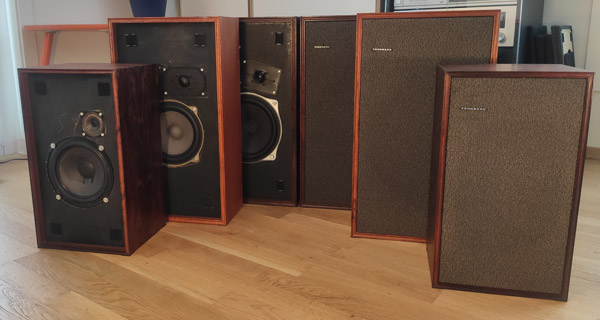

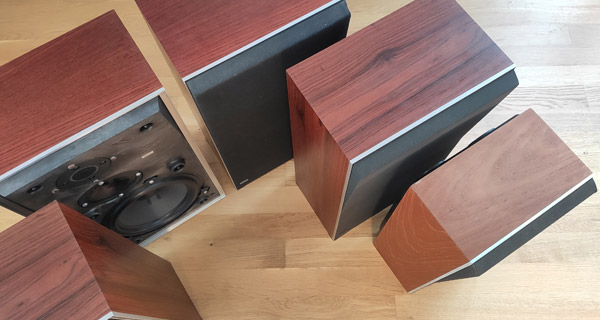
The core technology behind speakers hasn’t changed since their invention. We still rely on the cone, voice coil, and magnet. While the basic principle remains the same, newer materials have been introduced over time. The most visible part of a driver is usually the cone, traditionally made of paper but now also produced from materials such as plastic or carbon fiber. There are even wooden designs.
Vintage speakers possess the true characteristics of loudspeakers: solid construction, large magnets, and extensive use of wood. In modern times, cost-cutting measures have led manufacturers to move away from these qualities, opting instead for cheaper materials and alternative technologies designed to reduce weight and production costs.
How to choose speakers?
There is no single correct formula, but several factors should certainly be taken into account: the size and layout of the room, listening distance, the amplifier you’re using, and the type of music you listen to. And last, but not least, personal taste. What do you like most? Which color, type of wood, or style of front grille appeals to you?Types of speakers
Speakers are difficult to categorize rigidly, but a good starting point is whether they are active (with a built-in amplifier and requiring a power supply) or passive (connected only by speaker cables from an external amplifier).By size and design, speakers can be divided into 2-way, 3-way, 4-way (and more) systems. For example, a 3-way speaker has three drivers. More drivers generally mean greater output and improved sound reproduction, as each driver is responsible for a specific frequency range.